Dry Aged Beef Mold Microbial Ecology

Changes in Physico-Chemic and Storage Properties of Dry out-Aged Beefiness Loin Using Electric Field Refrigeration System
Section of Animal Resource Science, Kongju National University, Yesan 32439, Chungnam, Korea
*
Author to whom correspondence should be addressed.
Academic Editor: Manuel Juárez
Received: 28 April 2022 / Revised: 21 May 2022 / Accepted: 23 May 2022 / Published: 24 May 2022
Abstract
The aim of this study is to establish the dry out aging menses of beef loin in an electric field refrigeration system. Beefiness loins (Korea quality grade 2) were dry aged at 0, −i, and −2 °C temperature in an electrical field refrigeration organization (air velocity, 5 ± 2 g/southward) and aging stopped as the value of TPC reached 7 log CFU/thou. Samples were examined by aging yield, trimming yield, pH, colour, h2o holding capacity (WHC), cooking yield, shear force, total plate count (TPC), 2-thiobarbituric acid reactive substances (TBARS), and volatile basic nitrogen (VBN). The results for aging yield, trimming yield, redness, yellowness, and blush decreased with increasing the dry aging flow. Contrariwise, those for pH, lightness, hue angle, WHC, and cooking yield increased with the dry out aging period. In shear forcefulness, the lowest value occurred at four weeks at all temperatures. The results for TPC, TBARS, and VBN increased with aging period, and VBN at 6 weeks at 0 °C and ix weeks at −i °C exceed the standard value (20 mg/100 1000), while dry aging temperature had an effect on physico-chemic and storage properties by lower temperatures showed slower progress. Therefore, dry aging on an electric field air-condition organization can be used until 4 weeks at 0 °C, 8 weeks at −one °C, and 10 weeks at −ii °C. Yet, considering physico-chemical properties, 4 weeks at every temperature is suitable for manufacturing soft dry-aged beef loin.
ane. Introduction
In South korea, the standard beef quality grades are divided into grades 1++, 1+, 1, 2, and 3 based on marbling (grades one to 9) [i]. Grades 1++ and i+ show a prevalence rate of xxx.seven%, just their consumer preference is 73.seven%, which is quite loftier [2]. Most of the low-grade beef with a low consumer preference rating is Holstein, which is a major livestock breed consumed in South korea along with Hanwoo (a breed of cattle native to Korea) [three,4]. Holstein beef has a relatively loftier protein content despite its low marbling content, it has potential value every bit a nutrient ingredient that meets the needs of modern people who prefer high-poly peptide, low-fat foods [5]. Therefore, the texture of Holstein meat needs to be improved as the consumers prefer, and to solve this problem, diverse techniques such as aging, brining, and physical tenderization are applied [vi,vii].
Aging is a typical method of improving the sensory quality of meat, and the texture is effectively enhanced through complex changes in musculus metabolism after slaughtering [viii]. Dry crumbling is the process of aging the meat by exposing the meat surface to the air, which leads to the hydrolysis of proteins and fat past leaner to quickly improve the tenderness of the meat [nine]. By and large, dry aging takes place between 0 °C and four °C, merely long-term aging is difficult considering microorganisms on the meat surface produce peroxides and aldehydes [10]. At low temperatures (−1 °C to −3 °C), on the other hand, the water content in the meat freezes, which increases the book of the h2o molecules, destroying musculus. When thawed, information technology leads to a big corporeality of drip loss, along with decreases in qualities such as water property chapters (WHC), texture, and sensory properties [11].
In an electric field refrigeration arrangement, the h2o molecules independent in the food vibrate in the direction of the electrical field they are exposed to, and as a result, a hygienically prophylactic state can exist maintained without freezing at a temperature below the freezing indicate [12]. Refrigeration systems take been reported to exist a promising technology that tin can maintain the freshness of foods by inhibiting microbial growth at low temperatures [13]. Furthermore, electric field refrigeration systems can have a positive effect on meat by increasing flavor, yield, and storage backdrop through physical and biochemical changes in a hygienically safe state [xiv]. Accordingly, few studies have been conducted in which electrical fields are applied to meat [xv].
In South Korea, however, the electric field dry-aging standard is unclear, and at that place are very few cases of the awarding of electric field refrigeration systems [xvi]. Therefore, we aim to employ this report to provide bones data to establish an electrical field dry-aging organisation using an electrical field refrigeration system at temperatures below freezing bespeak.
2. Materials and Methods
2.1. Preparation of Dry-Aged Beef Loin
Beef loin (Holstein; M. longissimus dorsi; Korea quality grade two; Ihome meat, Seoul, Korea) was refrigerated for 24 h subsequently slaughter, and loins were cold delivered inside 12 h and used after removing backlog fat and connective tissues. For the experiment, beef loins were collected from a total of 27 carcasses. The loins of the carcasses were grouped into three groups and then severed in 290–310 1000 portions and randomly placed in an electric field refrigerator organisation [10] (air velocity, v ± 2 m/due south; electrical field strength, 5 kV; ARD-090RM-F, Mars, Fukushima, Nihon) at three temperatures, 0 °C, −one °C, −ii °C, and crumbling stopped equally the value of TPC reached 7 log CFU/chiliad. After aging, samples were trimmed for experiments, and the crust (surface of dry-aged beef loin) was examined for storage properties and the inner edible parts for physico-chemical properties.
2.two. Aging Yield
The aging yield of the samples was determined from the weights both before and after dry aging with the following formula [17].
ii.iii. Trimming Yield
The trimming yield of the samples was adamant from the weights both before and later trimming the surface of dry-aged beef loins (crust) with the following formula [17].
two.iv. pH
The samples were homogenized with distilled water (1:4, 5/v) using an Ultra Turrax homogenizer (HMZ-20DN, Poonglim Tech, Seongnam, Korea) for 1 min at 6991× g. Afterwards homogenizing, the pH of the mixture was determined using a pH meter (Model S220, Mettler-Toledo, Columbus, OH, Us). Prior to the analysis, the pH meter was calibrated in room temperature using pH buffer solutions of pH 4.01 ± 0.01, pH vii.00 ± 0.01, and pH 10.00 ± 0.01 (Suntex Instruments co. ltd., New Taipei Urban center, Taiwan).
2.5. Color
Subsequently dry out aging finished, the samples' cores were cut into 5 × five × five cmiii blocks right away and surfaces were randomly evaluated using a colorimeter, adapted to operate with an discontinuity of 8 mm, ii° standard observer, illuminant D65, and pulsed xenon lamp as a default light source. Before measuring, the device was calibrated with a white plate, CIE L*: +97.83, CIE a*: −0.43, and CIE b*: +ane.98 (CR-10, Minolta, Tokyo, Japan); the lightness (CIE L*), redness (CIE a*), and yellowness (CIE b*) were recorded. The Hue bending and Chroma value were calculated with the post-obit formula.
2.6. Water Property Capacity (WHC)
The WHC of samples was determined past the filter paper printing method [18]. An amount of 0.3 g of dry-aged beefiness loin inner role was placed at the centre of the filter paper (Whatman No. 1, GE Healthcare, Chicago, IL, USA) and compressed for 3 min using a plexiglass plate device. The WHC was calculated with the post-obit formula.
2.seven. Cooking Yield
The cooking yield of the samples was adamant from the weights earlier and after cooking (core temperature 72 ± one °C for 120 min by convection) and so after cooling at 10 °C for 20 min with the following formula [19].
ii.8. Shear Force
Samples were cut into 1 × 1 × 1 cmthree blocks and each block was analyzed using a texture analyzer (TA 1, Lloyd, Largo, FL, USA); the machine analyzing atmospheric condition were every bit follows: Five-blade with a exam speed of 21.0 mm/s, a caput speed of 21.0 mm/south, a distance of 22.0 mm, and a force of v.vi N. Measured values are expressed in Newtons (Due north).
2.9. Total Plate Count (TPC)
A sample of 10–20 grand of crust sample was placed into sample numberless (193OF, 3M, Saint Paul, MN, Us) with 0.1% buffer peptone water twice the weight of samples. Subsequently measuring, samples were stomached in a stomacher (WH4000-2751-9, 3M, Saint Paul, MN, U.s.a.) for two min and prepared by repeating as many dilutions every bit necessary. Diluted samples were plated in typic soy agar (BD Difco, Franklin Lakes, NJ, USA) and incubated at 37 °C in an incubator (WSC-2610, ATTO, Tokyo, Nihon) for 24 h. Counts were recorded as colony forming units per gram (CFU/g).
2.ten. Thiobarbituric Acid Reactive Substances (TBARS)
Lipid oxidation caste of samples were determined using the TBARS method of Witte et al. [20]. 5 grams of crust sample, 12.five mL of ten% PCA solution, and 200 µL of 0.3% BHT were homogenized using homogenizer (AM-five, Nihonseiki, Tokyo, Japan) for 1 min and filtered with filter paper (Whatman No. i, GE Healthcare), so 5 mL of filtrate was mixed with 0.02 M TBA solution and reacted in a 100 °C h2o bath (JSWB-30T, JSR, Gongju, Korea) for 10 min. Measurements were then fabricated using a multi-fashion microplate reader (Spectra Max iD3, Molecular devices, San Jose, CA, USA) at an absorbance of 532 nm. The amount of malondialdehyde (MDA) was calculated using a standard curve prepared from i,one,three,3-trethoxypropane, and the TBARs value was reported as mg MDA per kg of sample.
2.11. Volatile Basic Nitrogen (VBN)
VBN was determined using the method of Choi et al. [21]. Ten grams of crust sample was weighted with xxx mL of distilled h2o and homogenized at 10,923× g for 1 min. Afterward homogenizing, information technology was massed with distilled water to 100 mL and filtered through filter paper (Whatman No. 1, GE Healthcare). The outer chamber of the Conway unit was filled with 1 mL of filtrate and the inner bedroom was filled with i mL of 0.01 N H3BO3, and then 100 µL of Conway reagent was put in the inner chamber and 1 mL of 50% KtwoCO3 was put in the outer sleeping room and sealed. The unit was incubated at 37 °C for 2 h, after which the collected liquid of the inner sleeping accommodation was titrated with 0.02 North HtwoSOiv and calculated using the following formula:
where A is the volume of sulfuric acid consumed for the sample titration (mL), B is the book of sulfuric acrid consumed for the blank titration (mL), f is factor of reagent, N is normality, c is dilution ratio, and S is sample weight
two.12. Statistical Analysis
All experimental results were assessed after a minimum of 3 repeated trials. Statistical analyses were performed using SAS (version ix.3 for window, SAS Establish Inc., Cary, NC, U.s.a.) at a confidence level of p < 0.05; results are indicated herein every bit a hateful and standard fault of the means (SEM). Data were bundled past two different factors (temperature and aging period) and significant differences were verified using a one-way analysis of variance (ANOVA) and Duncan's multiple range tests.
The general linear model (GLM) of the ANOVA was used to determine, separately, the meaning differences in the aging yield, trimming yield, pH, color, WHC, cooking yield, shear force, TPC, TBARS, and VBN measurements of beef loin samples among aging periods and temperatures.
iii. Results and Discussion
3.1. Aging Yield and Trimming Yield
Table 1 shows the aging yield and trimming yield of beefiness loin, which was dry out aged using the electric field refrigeration system. The crumbling yield showed a decreasing trend as the aging menstruum increased at all temperatures. In the second, fourth, and 6th weeks, a significantly college aging yield was shown at 0 °C than at −one °C and −2 °C (p < 0.05). This is considering dry out crumbling leads to extensive water evaporation due to the surface beingness exposed to the air, and, consequently, a thick chaff is produced on the surface, which affects the aging yield [17]. As the internal h2o content of the meat evaporates, the crumbling yield decreases, and when there are no elements that prevent contraction, such as basic and intermuscular fat, the aging yield decreases more speedily [22]. The trimming yield showed a decreasing trend as the aging period increased at all temperatures. In the second, seventh, eighth, and ninth weeks of aging, the trimming yield was significantly higher at −2 °C than at −1 °C (p < 0.05). This is because in the example of dry out aging, the surface is exposed to the air, and equally the temperature drops, the contraction rate of the muscles slows down, which decreases the drainage rate of the internal water content to the exterior [23]. If the water content drainage rate decreases, the reduction of the water content also slows down, and the hardening of the meat surface proceeds more slowly [24]. Therefore, if the electric field refrigeration system is used to proceed with dry aging, hardening will occur more slowly as the temperature decreases, producing a larger edible function.
iii.2. pH and Colour
Table two shows the pH values of beef loin dry out aged using the electrical field refrigeration system. pH showed an increasing trend equally the aging catamenia increased at all temperatures, and it increased more slowly as the crumbling temperature dropped. The rising in pH with an increment in the dry-aging period is due to the alkaline metal substances produced past the proteolytic activeness of micro-organisms [25]. The proteolytic action of micro-organisms is less active at low temperatures, leading to slower production of alkaline metal substances, which affects pH [26]. Because a ascent in pH inhibits the oxidation of myoglobin, it tin minimize the discoloration of aged meat [27], and information technology is adamant that if dry out crumbling is performed at low temperatures, as in this written report, the discoloration rate will decrease, having a positive effect on the quality.
Tabular array 3 shows the color values of the beefiness loin dry anile using the electric field refrigeration system. The lightness value (CIE L*) showed an increasing trend as the aging menstruum increased at all temperatures. The lightness has a positive correlation with pH, and if pH increases, the length of the sarcomeres increases, which lightens the nighttime segments, affecting lightness [28]. Furthermore, as the space between muscle fibers increases due to the increase in pH, the light absorption charge per unit increases forth with a subtract in the reflection rate, resulting in a higher lightness [29]. On the other hand, the redness (CIE a*) and yellowness (CIE b*) tended to decrease every bit the aging flow increased at all temperatures. It seems that as oxygen and the myoglobin of aged meat bond, they form oxidized myoglobin, affecting the redness and yellowness [30]. When the heme pigment of myoglobin bonds with oxygen, the redness and yellowness of the anile meat decrease, and in the case of dry-aged meat, the oxidation reaction is greater because the area exposed to the air is large [31]. At all temperatures, equally the aging period increased, the hue angle showed an increasing trend, and the chroma showed a decreasing tendency. Hue bending and chroma are affected by the redness: if the redness decreases, the blush decreases and the hue angle increases [32]. The metmyoglobin concentration is used equally an indicator of the caste of discoloration of meat based on the correlations of redness, hue angle, and chroma [33]. In this study, we have confirmed that at all temperatures, as the aging period increases, the lightness and hue angle of beefiness increment, and the redness, yellowness, and chroma decrease, resulting in discoloration. Furthermore, information technology is determined that dry-aged meat having a similar chromaticity as fresh meat tin can exist produced at low temperatures since discoloration will occur slowly.
3.3. WHC, Cooking Yield, and Shear Force
Table 4 shows the WHC values of the beef loin dry out aged using the electric field refrigeration organization. WHC showed an increasing trend equally the aging period increased at all temperatures. In meat, WHC has a positive correlation with pH [34], and this report also showed that the pH and WHC of the meat dry out aged using the electrical field refrigeration organization take a positive correlation. As the pH increases, the number of anion increased and it spread the gap between musculus fibers, which increases the space that can store water, resulting in a higher WHC [35]. Furthermore, equally the aging period of dry-anile meat increases, the free water in the meat evaporates, increasing the WHC [36]. In this study, therefore, it was adamant that as the aging temperature drops, the evaporation of complimentary water inside the dry-aged meat is inhibited, resulting in a gradual increase in WHC.
Tabular array five shows the cooking yield and shear force of the beef loin dry anile using the electric field refrigeration organisation. The cooking yield showed an increasing trend as the aging period increased at all temperatures. Macharáčková et al. [37] reported that the cooking yield increased as the dry-aging period increased, which was similar to the result of this study. The correlation between WHC and cooking yield is determined by the amount of h2o present between the musculus fibers lost during the cooking process [38]. This reduces the loss of water through the chemical bond of the proteins of the fragmented cytoskeletons, resulting in a higher cooking yield [39]. Furthermore, since free water has already evaporated during the dry-aging process, the amount of water lost through cooking is small, and this written report also confirms that the cooking yield increases forth with the WHC.
The shear forcefulness showed the lowest value in the fourth week at 0 °C and −two °C and in the second and quaternary weeks at −1 °C (p < 0.05). Calpain, a proteolytic enzyme that affects shear force, is agile at the beginning of aging and decreases as the aging menses increases [xl]. Calpains are active upwards to three weeks of aging on average, and afterward, because the calpains become less active, the shear force no longer increases or rises only slightly [41]. Furthermore, the h2o content affects the shear force, and in dry aging, the evaporation of gratis h2o in the meat occurs rapidly, while in the latter half of aging, the shear force does not decrease but increases due to the hardening of the meat [25]. Therefore, based on the WHC, cooking yield, and shear forcefulness results, we have determined that the tissues are softest when the meat is dry aged for four weeks when using the electric field refrigeration system.
3.iv. TPC, TBARS and VBN
Effigy 1 shows the TPC of the beef loin dry aged using the electric field refrigeration system. The TPC showed an increasing trend as the crumbling catamenia increased at all temperatures versus a more than gradually increasing tendency as the temperature dropped. In the dry-aging process, micro-organisms are an of import gene involved in the safe of food and the tenderness and flavor of meat, and they are afflicted by the aging temperature [42]. Microbial growth and proteolysis occur rapidly in meat at loftier temperatures, merely slowly at low temperatures [nine]. Furthermore, at low aging temperatures, the growth of Pseudomonas sp., psychrotrophic bacteria, affects TPC [43]. The microbial growth is a benchmark for determining whether the meat is spoiled or non: If the TPC exceeds 7 log CFU/mg, it is determined that the meat is spoiled [44]. In this report, therefore, we determined that within a range not exceeding 7 log CFU/mg, the electric field refrigerator dry aging is well-nigh suitable for up to seven weeks at 0 °C, 9 weeks at −one °C, and 10 weeks at −two °C.
Figure 2 shows the lipid oxidation caste (TBARS) of the beef loin dry aged using the electric field refrigeration system. The TBARS showed an increasing trend as the aging catamenia increased at all temperatures and a more gradually increasing trend every bit the temperature dropped. Considering dry aging is performed with exposure to the air, lipid oxidation occurs more rapidly than with other crumbling methods [45]. MDA, a reactive chemical compound formed by lipid oxidation, spreads to sarcoplasmic proteins and interacts with myoglobin, causing discoloration [46]. The MDA production rate becomes slower as the crumbling temperature drops [47]. Considering that rancid season is a unique flavour of dry out-aged beef, Ribeiro et al. [48] recommend 2.28 mg MDA/kg or less as a standard for TBARS. In this study, therefore, nosotros adamant that if meat is dry out aged using the electric field refrigeration arrangement, it will be rubber in terms of quality and hygiene since the TBARS will not exceed 2.28 mg MDA/kg at all temperatures.
Figure 3 shows the VBN of the beef loin dry aged using the electrical field refrigeration organisation. The VBN showed an increasing trend every bit the aging menstruum increased and a more gradually increasing tendency as the temperature dropped. The master cause of the VBN is amino acid deamination past proteolytic enzymes and the ammonia production by micro-organisms [49]. At low temperatures, the proteolysis and the microbial growth tedious down, resulting in a gradual increase in VBN [l]. Furthermore, Lee et al. [51] take reported that storage at a temperature below the glass transition temperature may reduce the increment in the amount of volatile basic nitrogen. VBN has a positive correlation with TPC, and in the instance of beef, it is known that the early stage of decaying occurs between fifteen and xx mg/100 thousand [52]. In this written report, we adamant that, within a range of VBN values that do not exceed 20 mg/100 yard, meat dry aged using the electric field refrigeration system will exist safe in terms of quality and hygiene for up to 4 weeks at 0 °C, 8 weeks at −1 °C, and x weeks at −two °C.
4. Conclusions
This study investigated the physico-chemical (aging yield, trimming yield, pH, color, WHC, cooking yield, and shear force) and storage properties (TPC, TBARS, and VBN) of beef loin to establish the dry aging period in an electric field refrigerating system (temperature: 0, −1, −2 °C). Regarding its physico-chemic backdrop, with increasing dry aging period, aging yield, trimming yield, redness, yellowness, and chroma decreased, and pH, lightness, hue bending, WHC, and cooking yield increased. While shear force showed its lowest value at 4 weeks at all 3 temperatures. The results of storage properties showed that TPC and TBARS satisfied the standard values (TPC: vii log CFU/mg, TBARS: 2.28 mg MDA/kg) during the dry aging catamenia. However, VBN at 6 weeks at 0 °C and 9 weeks at −1 °C exceeded the standard value (20 mg/100 1000). In conclusion, the dry crumbling periods when using an electric field refrigerating system must not exceed four weeks at 0 °C, 8 weeks at −1 °C, or 10 weeks at −2 °C. However, because the texture, iv weeks at all temperatures seems to be suitable for manufacturing soft dry-aged beef loin.
Writer Contributions
Conceptualization, H.-Y.Grand.; methodology, Grand.-M.Thousand.; software, South.-H.Fifty.; validation, H.-Y.M.; formal analysis, K.-K.M.; investigation, One thousand.-1000.Chiliad.; resources, H.-Y.K.; data curation, S.-H.L.; writing—original draft preparation, Thousand.-G.1000.; writing—review and editing, Thousand.-M.M. and S.-H.L.; supervision, H.-Y.Chiliad.; project assistants, H.-Y.Yard.; funding acquisition, H.-Y.K. All authors accept read and agreed to the published version of the manuscript.
Funding
This inquiry was supported by Basic Science Research Program through the National Research Foundation of Korea (KRF) funded past the Ministry of Education (2018R1D1A1B07049938).
Institutional Review Lath Statement
Not applicable.
Informed Consent Statement
Non applicable.
Information Availability Statement
Data sharing is not applicable to this article.
Conflicts of Involvement
The authors declare no conflict of involvement.
References
- Cho, J.; Kim, H.; Jung, Grand. Assay of the touch of beef grading system reform on the price of premium Hanwoobeef. Korean J. Agric. Manag. Policy. 2021, 48, 279–289. [Google Scholar] [CrossRef]
- Lee, H.J.; Choe, J.H.; Yun, Y.G.; Yoon, Y.; Jo, C. Value-addition of depression-marbled beef by dry crumbling. Food Sci. Anim. Resour. Ind. 2017, 6, 72–79. [Google Scholar]
- Cho, W.M.; Yang, S.H.; Lee, Southward.M.; Jang, Southward.S.; Kim, H.C.; Hong, Southward.K.; Park, W.Y.; Kim, H.Due south. Furnishings of different additives on the growth performance and carcass characteristics of Holstein steers. J. Life Sci. 2012, 22, 161–166. [Google Scholar] [CrossRef]
- Kim, T.K.; Ku, S.M.; Kim, Y.B.; Hong, Southward.H.; Yu, H.H.; Paik, H.D.; Choi, Y.Due south. Study on index cistron and processing quality of low-fat and non-preferred parts of Hanwoo and Holstein. Korean J. Food Cook Sci. 2018, 34, 1–7. [Google Scholar] [CrossRef]
- Choe, J.H.; Kim, H.Y. Effects of dry crumbling on physicochemical properties of beef cattle loins. Korean J. Food Sci. Technol. 2017, 49, 158–161. [Google Scholar] [CrossRef]
- Nam, I.S. The direction of evolution of the beefiness industry according to the recent consumption trend. J. Korea Dairy Beefiness. 2017, 37, 124–127. [Google Scholar]
- Obuz, E.; Akkaya, L.; Gök, Five.; Dikeman, M.East. Effects of blade tenderization, aging method and aging time on meat quality characteristics of Longissimus lumborum steaks from cull Holstein cows. Meat Sci. 2014, 96, 1227–1232. [Google Scholar] [CrossRef]
- Marino, R.; Albenzio, M.; Della Malva, A.; Santillo, A.; Loizzo, P.; Sevi, A. Proteolytic design of myofibrillar poly peptide and meat tenderness as afflicted by brood and aging time. Meat Sci. 2013, 95, 281–287. [Google Scholar] [CrossRef]
- Dashdorj, D.; Tripathi, V.Grand.; Cho, Southward.; Kim, Y.; Hwang, I. Dry aging of beef; review. J. Anim. Sci. Technol. 2016, 58, ane–11. [Google Scholar] [CrossRef]
- Park, S.Y.; Kim, H.Y. Electric field induced super-cooling system for long term dry-anile beef loin. Food Sci. Anim. Resour. 2020, 40, 286. [Google Scholar] [CrossRef]
- Lagerstedt, Å.; Enfält, L.; Johansson, L.; Lundström, Chiliad. Effect of freezing on sensory quality, shear force and water loss in beefiness M. longissimus dorsi. Meat Sci. 2008, 80, 457–461. [Google Scholar] [CrossRef]
- Fallah-Joshaqani, S.; Hamdami, Northward.; Keshavarzi, E.; Keramat, J.; Dalvi-Isfahan, M. Evaluation of the static electric field effects on freezing parameters of some nutrient systems. Int. J. Refrig. 2019, 99, 30–36. [Google Scholar] [CrossRef]
- Hu, H.; Zhang, L.; Lu, 50.; Huang, F.; Chen, W.; Zhang, C.; Zhang, H.; Goto, Grand. Furnishings of the combination of moderate electric field and loftier-oxygen modified atmosphere packaging on pork meat quality during chill storage. J. Food Procedure Preserv. 2020, 44, e14299. [Google Scholar] [CrossRef]
- Khan, A.A.; Randhawa, M.A.; Carne, A.; Ahmed, I.A.M.; Barr, D.; Reid, Thou.; Bekhit, A.E.D.A. Quality and nutritional minerals in craven breast musculus treated with low and loftier pulsed electric fields. Food Bioprocess Technol. 2018, 11, 122–131. [Google Scholar] [CrossRef]
- Bhat, Z.F.; Morton, J.D.; Mason, S.50.; Bekhit, A.E.D.A. Current and future prospects for the utilize of pulsed electric field in the meat industry. Crit. Rev. Food Sci. Nutr. 2019, 59, 1660–1674. [Google Scholar] [CrossRef]
- Hwang, I. Status and perspective of stale aging beef. Food Sci. Anim. Resour. Ind. 2015, 4, 23–29. [Google Scholar]
- Berger, J.; Kim, Y.H.B.; Legako, J.F.; Martini, Due south.; Lee, J.; Ebner, P.; Zuelly, S.M.S. Dry-aging improves meat quality attributes of grass-fed beefiness loins. Meat Sci. 2018, 145, 285–291. [Google Scholar] [CrossRef]
- Grau, R.; Hamm, R. Eine einfache methode zur bestimmung der wasserbindung im muskel. Naturwissenschaften 1953, 40, 29–30. [Google Scholar] [CrossRef]
- Park, Southward.Y.; Kim, H.Y. Effects of marketing ages on the physicochemical backdrop and sensory aspects of cured broiler chicken breast meat. Foods 2021, x, 2152. [Google Scholar] [CrossRef]
- Witte, Five.C.; Krause, G.F.; Bailey, M.E. A new extraction method for determining 2-thiobarbituric acid values of pork and beefiness during storage. J. Food Sci. 1970, 35, 582–585. [Google Scholar] [CrossRef]
- Choi, Thousand.J.; Abduzukhurov, T.; Park, D.H.; Kim, E.J.; Hong, Chiliad.P. Effects of deep freezing temperature for long-term storage on quality characteristics and freshness of lamb meat. Korean J. Food Sci. Anim. Resour. 2018, 38, 959. [Google Scholar] [CrossRef] [PubMed]
- DeGeer, Southward.L.; Chase, M.C.; Bratcher, C.L.; Crozier-Dodson, B.A.; Johnson, D.Due east.; Stika, J.F. Effects of dry crumbling of bone-in and boneless strip loins using two aging processes for two crumbling times. Meat Sci. 2009, 83, 768–774. [Google Scholar] [CrossRef] [PubMed]
- Cho, S.; Kang, S.M.; Kim, Y.S.; Kim, Y.C.; Van, B.H.; Seo, H.Due west.; Lee, E.M.; Seong, P.N.; Kim, J.H. Comparison of drying yield, meat quality, oxidation stability and sensory properties of bone-in beat out loin cut past different dry-crumbling conditions. Korean J. Nutrient Sci. Anim. Resour. 2018, 38, 1131. [Google Scholar] [CrossRef] [PubMed]
- da Silva Bernardo, A.P.; da Silva, A.C.Chiliad.; Francisco, 5.C.; Ribeiro, F.A.; Nassu, R.T.; Calkins, C.R.; da Silva, North.M.; Pflanzer, Due south.B. Effects of freezing and thawing on microbiological and concrete-chemical properties of dry-anile beef. Meat Sci. 2020, 161, 108003. [Google Scholar] [CrossRef]
- Shi, Y.; Zhang, W.; Zhou, G. Effects of different moisture-permeable packaging on the quality of crumbling beefiness compared with wet aging and dry aging. Foods 2020, 9, 649. [Google Scholar] [CrossRef]
- Carne, A.; van de Ven, R.; Bekhit, A.E.D.A.; Hopkins, D.L. Effect of pulsed electrical field treatment on the eating and keeping qualities of cold-boned beefiness loins: Affect of initial pH and fibre orientation. Food Bioprocess Technol. 2015, viii, 1355–1365. [Google Scholar]
- Colle, M.J.; Richard, R.P.; Killinger, K.Thousand.; Bohlscheid, J.C.; Gray, A.R.; Loucks, West.I.; Twenty-four hour period, R.N.; Cochran, A.S.; Nasados, J.A.; Doumit, 1000.East. Influence of extended crumbling on beef quality characteristics and sensory perception of steaks from the gluteus medius and longissimus lumborum. Meat Sci. 2015, 110, 32–39. [Google Scholar] [CrossRef]
- Hughes, J.M.; Clarke, F.M.; Purslow, P.P.; Warner, R.D. Meat color is determined non only by chromatic heme pigments simply also past the physical structure and achromatic low-cal scattering properties of the muscle. Compr. Rev. Food Sci. Food Saf. 2020, 19, 44–63. [Google Scholar] [CrossRef]
- Ribeiro, F.A.; Lau, S.K.; Furbeck, R.A.; Herrera, Due north.J.; Henriott, M.L.; Bland, N.A.; Fernando, South.C.; Subbiah, J.; Sullivan, G.A.; Calkins, C.R. Ultimate pH effects on dry-aged beef quality. Meat Sci. 2021, 172, 108365. [Google Scholar] [CrossRef]
- Kim, J.H.; Jeon, One thousand.Y.; Lee, C.H. Physicochemical and sensory characteristics of commercial, frozen, dry, and wet-aged Hanwoo sirloins. Asian Australas. J. Anim. Sci. 2019, 32, 1621. [Google Scholar] [CrossRef]
- Maggiolino, A.; Sgarro, 1000.F.; Natrella, G.; Lorenzo, J.M.; Colucci, A.; Faccia, M.; De Palo, P. Dry aged beef steaks: Result of dietary supplementation with Pinus taeda hydrolyzed lignin on sensory profile, colorimetric and oxidative stability. Foods. 2021, 10, 1080. [Google Scholar] [CrossRef]
- Larraín, R.E.; Schaefer, D.M.; Reed, J.D. Employ of digital images to guess CIE colour coordinates of beefiness. Food Res. Int. 2008, 41, 380–385. [Google Scholar] [CrossRef]
- Mashau, M.E.; Ramatsetse, K.E.; Ramashia, Southward.E. Effects of adding Moringa oleifera leaves powder on the nutritional properties, lipid oxidation and microbial growth in ground beefiness during common cold storage. Appl. Sci. 2021, eleven, 2944. [Google Scholar] [CrossRef]
- Kim, J.H.; Kim, T.K.; Shin, D.M.; Kim, H.Westward.; Kim, Y.B.; Choi, Y.S. Comparative effects of dry out-aging and moisture-aging on physicochemical properties and digestibility of Hanwoo beef. Asian Australas. J. Anim. Sci. 2020, 33, 501. [Google Scholar] [CrossRef]
- Warner, R.D. The eating quality of meat—Four water-belongings capacity and juiciness. In Lawrie'due south Meat Science; Toldra, F., Ed.; Woodhead Publishing: Sawston, UK, 2017; pp. 419–459. [Google Scholar]
- Farouk, M.M.; Mustafa, N.Chiliad.; Wu, G.; Stuart, A.D.; Dobbie, P.Thou.; Krsinic, G. Meat ageing improvement in water belongings: A biophysical procedure. In Proceedings of the 56th ICoMST, Seoul, Korea, 15–xx August 2010. [Google Scholar]
- Macharáčková, B.; Bogdanovičová, K.; Ježek, F.; Bednář, J.; Haruštiaková, D.; Kameník, J. Cooking loss in retail beef cuts: The effect of muscle type, sex, ageing, pH, salt and cooking method. Meat Sci. 2021, 171, 108270. [Google Scholar] [CrossRef]
- Straadt, I.K.; Rasmussen, M.; Andersen, H.J.; Bertram, H.C. Aging-induced changes in microstructure and water distribution in fresh and cooked pork in relation to water-holding capacity and cooking loss—A combined confocal light amplification by stimulated emission of radiation scanning microscopy (CLSM) and low-field nuclear magnetic resonance relaxation study. Meat Sci. 2007, 75, 687–695. [Google Scholar] [CrossRef]
- Vaskoska, R.; Ha, 1000.; Naqvi, Z.B.; White, J.D.; Warner, R.D. Muscle, ageing and temperature influence the changes in texture, cooking loss and shrinkage of cooked beef. Foods 2020, 9, 1289. [Google Scholar] [CrossRef]
- Oh, J.; Lee, H.J.; Yoon, J.W.; Choe, J.; Jo, C. Electrical resistance and mold distribution on beefiness surface as indicators of dry aging. J. Food Process Eng. 2019, 42, e13122. [Google Scholar] [CrossRef]
- Vossen, Due east.; Dewulf, L.; Van Royen, One thousand.; Van Damme, I.; De Zutter, L.; Fraeye, I.; De Smet, S. Influence of aging time, temperature and relative humidity on the sensory quality of dry-anile Belgian Bluish beef. Meat Sci. 2021, 183, 108659. [Google Scholar] [CrossRef]
- Capouya, R.; Mitchell, T.; Clark, D.I.; Clark, D.L.; Bass, P.; Capouya, R.D.; Bass, P.D. A survey of microbial communities on dry-aged beef in commercial meat processing facilities. Meat Muscle Biol. 2020, 4, 1–11. [Google Scholar] [CrossRef]
- Ryu, Southward.; Shin, M.; Cho, S.; Hwang, I.; Kim, Y.; Oh, S. Molecular characterization of microbial and fungal communities on dry out-aged beef of Hanwoo using metagenomic analysis. Foods. 2020, nine, 1571. [Google Scholar] [CrossRef] [PubMed]
- Hwang, South.I.; Hong, Grand.P. Effects of high pressure in combination with the type of crumbling on the eating quality and biochemical changes in pork loin. Meat Sci. 2020, 162, 108028. [Google Scholar] [CrossRef] [PubMed]
- Choe, J.; Kim, K.T.; Lee, H.J.; Oh, J.; Kim, H.C.; Park, B.; Choi, Y.I.; Jo, C. Storage stability of dry-aged beef: The furnishings of the packaging method and storage temperature. Korean J. Agric. Sci. 2018, 45, 211–218. [Google Scholar]
- Passetti, R.A.C.; Macedo, F.D.A.F.D.; Santos, Chiliad.R.D.A.; Bonin, E.; Vital, A.C.P.; Ramos, T.R.; Passetti, Fifty.C.K.; Ornaghi, M.G.; Costa, I.C.A.C.; Prado, I.N.D. Sensorial, colour, lipid oxidation, and visual acceptability of dry out-anile beef from young bulls with different fat thickness. Anim. Sci. J. 2020, 91, e13498. [Google Scholar] [CrossRef]
- Kim, S.; Lee, H.J.; Kim, Grand.; Yoon, J.W.; Shin, D.J.; Jo, C. Storage stability of vacuum-packaged dry out-anile beef during refrigeration at 4 °C. Food Sci. Anim. Resour. 2019, 39, 266. [Google Scholar] [CrossRef]
- Ribeiro, F.A.; Lau, Due south.K.; Pflanzer, S.B.; Subbiah, J.; Calkins, C.R. Color and lipid stability of dry aged beefiness during retail display. Meat Sci. 2021, 171, 108274. [Google Scholar] [CrossRef]
- Sujiwo, J.; Kim, H.J.; Vocal, S.O.; Jang, A. Human relationship between quality and freshness traits and torrymeter value of beef loin during common cold storage. Meat Sci. 2019, 149, 120–125. [Google Scholar] [CrossRef]
- Byun, J.S.; Min, J.Southward.; Kim, I.S.; Kim, J.West.; Chung, M.S.; Lee, M. Comparison of indicators of microbial quality of meat during aerobic cold storage. J. Food Prot. 2003, 66, 1733–1737. [Google Scholar] [CrossRef]
- Lee, Southward.; Kim, E.J.; Park, D.H.; Ji, Y.R.; Kang, Chiliad.; Choi, M.J. Deep freezing to maintain the freshness of pork loin during long-term storage. Food Sci. Biotechnol. 2021, 30, 701–710. [Google Scholar] [CrossRef]
- An, Southward.B.; Hwang, South.H.; Cho, Y.S. Storage stability of raw beef, dry out-crumbling beef, and wet-aging beef at refrigeration temperature. J. Nutrient Hyg. Saf. 2020, 35, 170–176. [Google Scholar] [CrossRef]
Effigy 1. TPC of dry-aged beef loin on 0, −1, −2 °C temperature electric field refrigerate system. a–f Means in the same temperature with dissimilar letters are significantly different (p < 0.05). A–C Ways in the same fourth dimension with different letters are significantly unlike (p < 0.05). Samples were measured until aging stopped as the value of TPC reached 7 log CFU/g.
Figure 1. TPC of dry out-aged beef loin on 0, −i, −2 °C temperature electrical field air-condition system. a–f Means in the same temperature with different letters are significantly different (p < 0.05). A–C Means in the same fourth dimension with unlike letters are significantly different (p < 0.05). Samples were measured until aging stopped as the value of TPC reached seven log CFU/k.
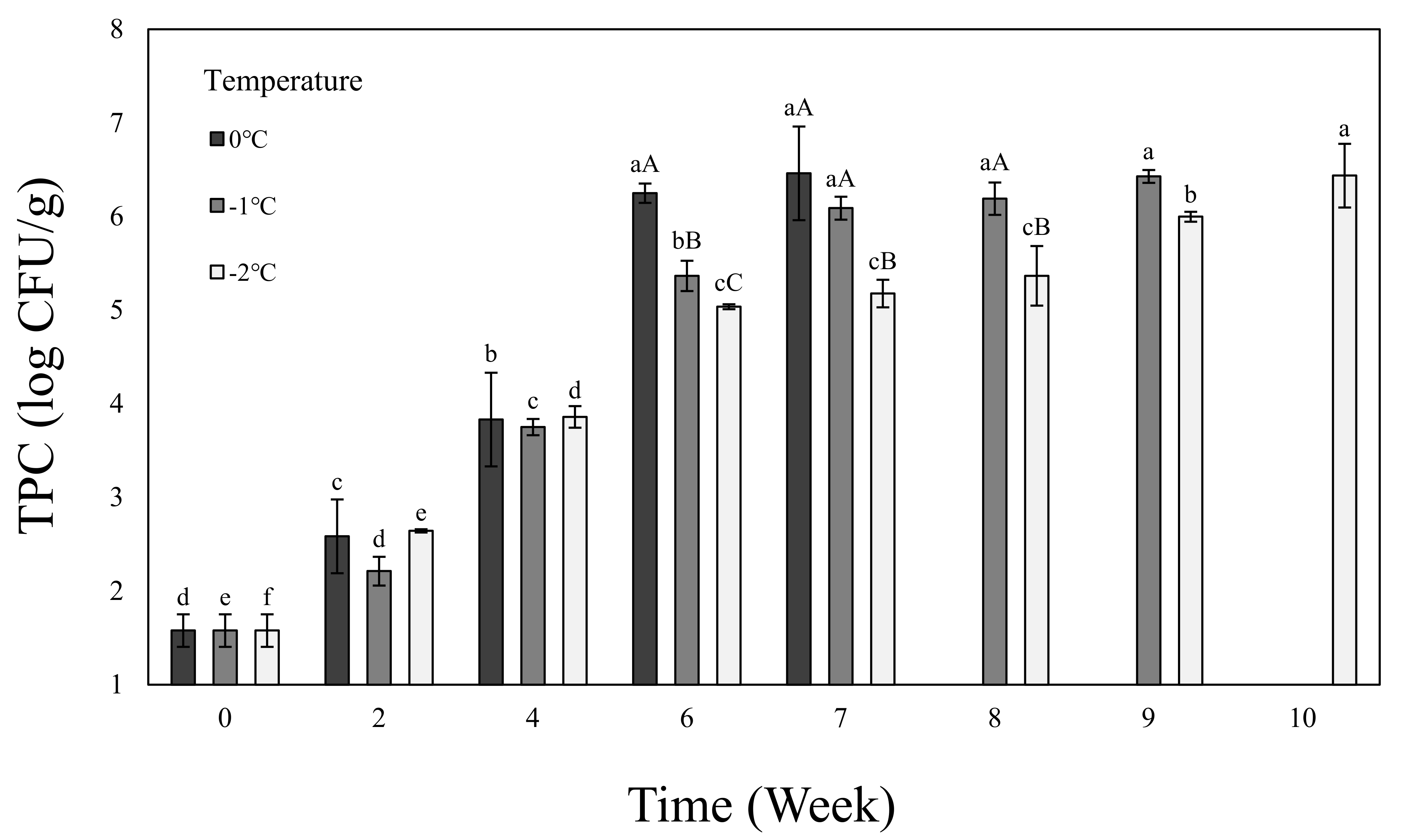
Figure ii. TBARS of dry-aged beefiness loin on 0, −1, −2 °C temperature electric field refrigerate system. a– h Means in the aforementioned temperature with different messages are significantly different (p < 0.05). A – C Means in the same time with dissimilar letters are significantly different (p < 0.05). Samples were measured until aging stopped as the value of TPC reached 7 log CFU/m.
Figure 2. TBARS of dry-aged beef loin on 0, −1, −ii °C temperature electric field refrigerate system. a– h Means in the same temperature with different letters are significantly different (p < 0.05). A – C Means in the aforementioned time with unlike letters are significantly dissimilar (p < 0.05). Samples were measured until aging stopped every bit the value of TPC reached seven log CFU/thou.
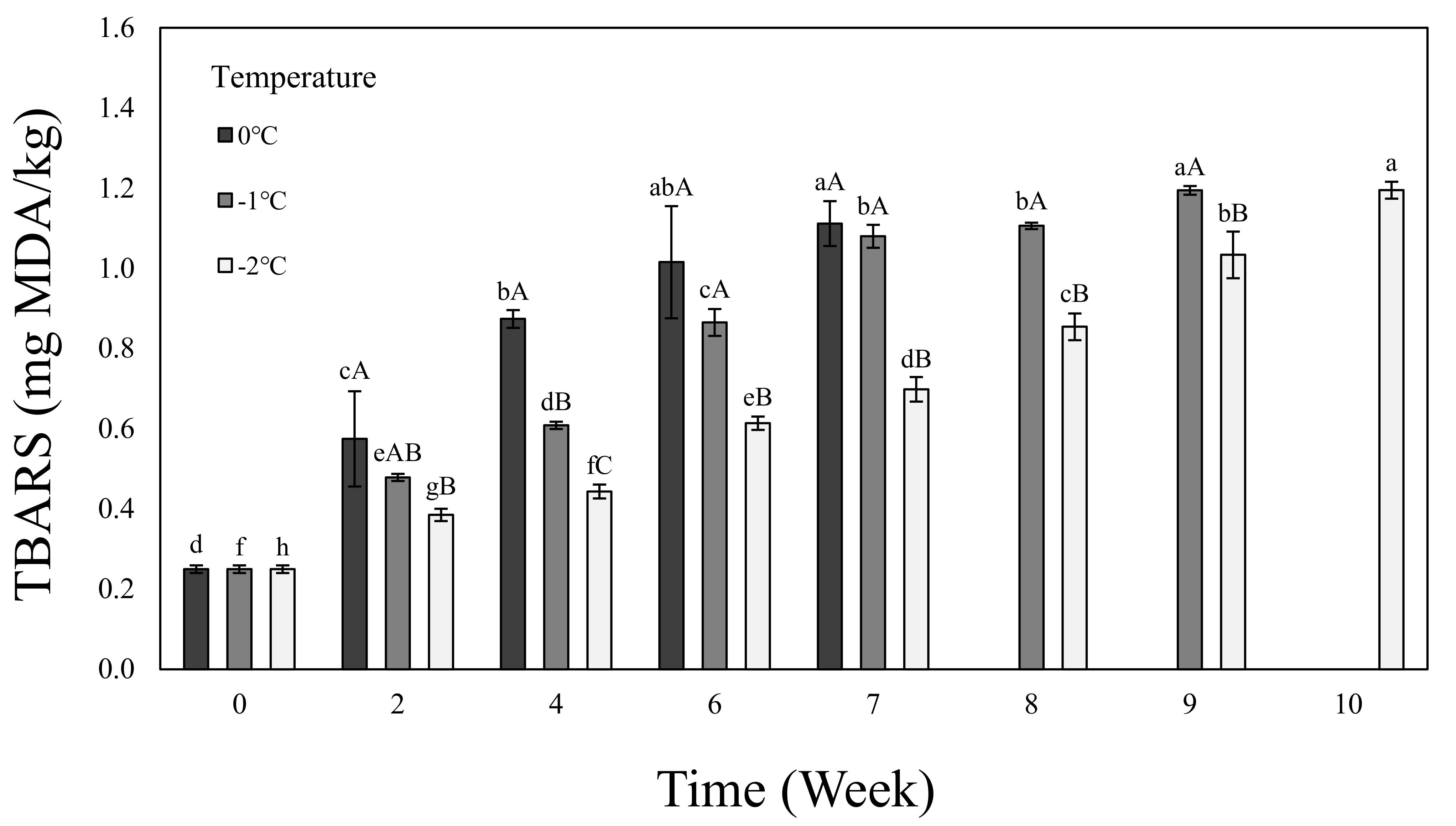
Figure 3. VBN of dry-anile beef loin on 0, −one, −two °C temperature electric field refrigerate organisation. a– d Means in the same temperature with dissimilar letters are significantly unlike (p < 0.05). A, B Ways in the same time with unlike letters are significantly different (p < 0.05). Samples were measured until aging stopped equally the value of TPC reached 7 log CFU/1000.
Figure iii. VBN of dry-anile beefiness loin on 0, −1, −2 °C temperature electric field refrigerate system. a– d Ways in the aforementioned temperature with unlike messages are significantly unlike (p < 0.05). A, B Means in the same time with unlike letters are significantly different (p < 0.05). Samples were measured until aging stopped as the value of TPC reached 7 log CFU/g.
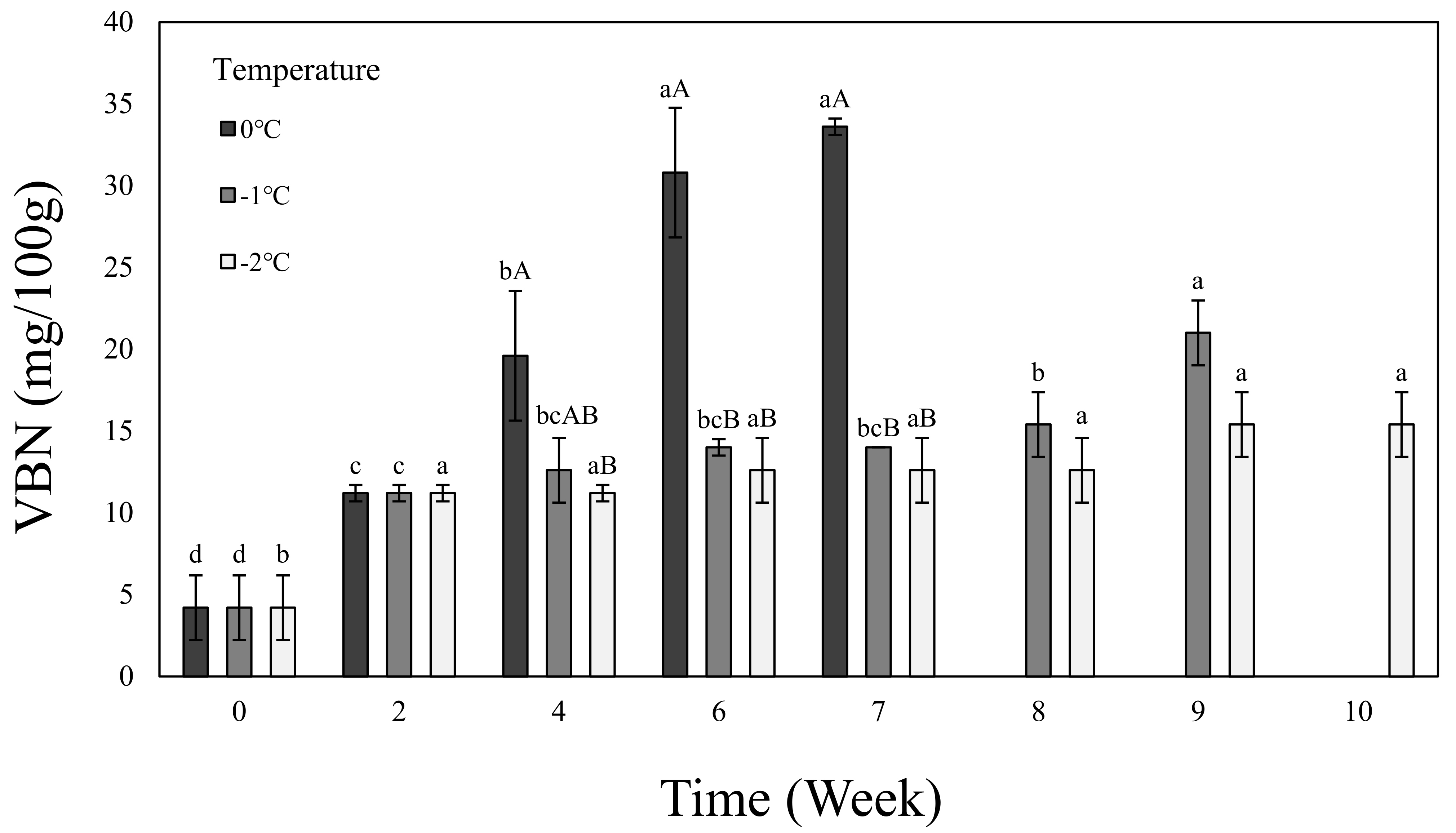
Table i. Aging yield and trimming yield of dry-aged beef loin on 0, −1, −two °C temperature electrical field air-condition organization.
Table 1. Aging yield and trimming yield of dry out-anile beef loin on 0, −1, −ii °C temperature electric field refrigerate organisation.
| Trait | Temperature (°C) | Fourth dimension (Calendar week) | SEM (1) | |||||||
|---|---|---|---|---|---|---|---|---|---|---|
| 0 | ii | 4 | half dozen | 7 | 8 | nine | 10 | |||
| Aging yield (%) | 0 | - | 83.67 aA | 71.69 bA | 63.66 cA | 56.51 dA | 0.45 | |||
| −1 | - | 66.37 aB | 57.79 bC | 53.20 bcB | 48.45 cdB | 45.76 d | 45.08 dB | 0.48 | ||
| −2 | - | 79.48 aA | 65.93 bB | 54.72 cB | 49.74 dB | 49.24 d | 47.73 dA | 46.64 d | 0.25 | |
| Trimming yield (%) | 0 | - | 74.04 aA | 58.xc b | fifty.22 b | 30.49 cB | 1.08 | |||
| −1 | - | 56.46 aB | 54.52 a | 45.33 b | 35.53 cB | 31.91 cdB | 26.25 dB | 0.45 | ||
| −ii | - | 74.34 aA | 56.20 b | 49.13 c | 44.57 cdA | 43.20 cdA | 41.50 deA | 36.55 eastward | 0.35 | |
Table 2. pH of dry-anile beef loin on 0, −i, −two °C temperature electric field air-condition arrangement.
Table ii. pH of dry-aged beef loin on 0, −one, −2 °C temperature electric field refrigerate arrangement.
| Trait | Temperature (°C) | Time (Week) | SEM (1) | |||||||
|---|---|---|---|---|---|---|---|---|---|---|
| 0 | two | 4 | half dozen | 7 | 8 | nine | x | |||
| pH | 0 | 5.27 c | v.58 bA | v.60 abA | 5.75 abA | 5.86 a | 0.02 | |||
| −i | 5.27 c | 5.lx bA | 5.62 bA | 5.67 bA | 5.68 b | 5.71 bA | 5.81 aA | 0.01 | ||
| −2 | 5.27 c | 5.44 bB | v.47 aB | v.49 aB | 5.50 a | 5.50 aB | five.50 aB | 5.51 a | 0.01 | |
Table 3. Color of dry-anile beef loin on 0, −i, −two °C temperature electric field air-condition organisation.
Table 3. Color of dry out-aged beef loin on 0, −1, −2 °C temperature electrical field refrigerate system.
| Trait | Temperature (°C) | Time (Week) | SEM (one) | |||||||
|---|---|---|---|---|---|---|---|---|---|---|
| 0 | 2 | 4 | 6 | 7 | eight | 9 | 10 | |||
| CIE L* | 0 | 39.38 c | twoscore.96 c | 41.threescore bc | 44.02 abA | 46.43 aA | 0.31 | |||
| −one | 39.38 d | 40.83 c | 41.thirteen c | 41.53 bcB | 41.83 bcB | 42.43 b | 46.23 aA | 0.09 | ||
| −2 | 39.38 d | 41.x c | 41.70 bc | 42.07 bcAB | 42.23 bcAB | 42.43 bc | 42.90 bB | 45.85 a | 0.10 | |
| CIE a* | 0 | 18.38 a | 14.68 bB | 10.24 c | 8.48 cdAB | 6.83 d | 0.29 | |||
| −1 | xviii.38 a | 14.ninety bB | 10.16 c | 6.27 dB | 5.33 de | 5.13 de | four.37 e | 0.09 | ||
| −2 | 18.38 a | 17.ten aA | 13.30 b | 9.l cA | 6.23 d | 5.55 d | 3.60 de | 2.fourscore e | 0.eleven | |
| CIE b* | 0 | eight.65 a | 7.33 b | half dozen.35 bc | 5.48 cd | 4.97 dA | 0.17 | |||
| −ane | 8.65 a | 7.43 b | 5.57 c | 2.97 d | 2.83 dB | 2.43 d | 2.23 d | 0.10 | ||
| −2 | 8.65 a | 7.55 ab | 5.95 b | iv.03 c | 3.87 cdAB | 3.73 cd | 3.67 cd | 2.07 d | 0.12 | |
| Hue angle | 0 | 25.21 b | 27.50 b | 31.54 aA | 32.92 a | 35.55 aA | 0.42 | |||
| −1 | 25.21 bc | 26.50 ab | thirty.41 aA | 25.39 bc | 23.68 bcB | 21.44 cB | 27.32 abB | 0.29 | ||
| −ii | 25.21 de | 24.44 due east | 22.76 eB | 27.55 d | 31.74 cA | 33.17 cA | fifty.18 aA | 45.82 b | 0.18 | |
| Chroma | 0 | 20.31 a | 16.55 bB | 12.91 c | 10.18 dA | 8.14 dA | 0.29 | |||
| −i | 20.31 a | 16.66 bB | 11.01 c | 6.94 dB | 6.32 dB | 5.71 de | iv.82 east | 0.08 | ||
| −2 | twenty.31 a | 18.78 aA | fourteen.69 b | 10.39 cA | seven.34 dAB | 6.65 de | four.54 ef | three.00 f | 0.16 | |
Table 4. WHC of dry out-aged beef loin on 0, −i, −ii °C temperature electric field refrigerate system.
Table 4. WHC of dry-aged beef loin on 0, −1, −2 °C temperature electric field air-condition system.
| Trait | Temperature (°C) | Time (Calendar week) | SEM (1) | |||||||
|---|---|---|---|---|---|---|---|---|---|---|
| 0 | 2 | 4 | half dozen | 7 | 8 | 9 | 10 | |||
| WHC (%) | 0 | 35.43 d | 61.91 cA | 80.82 bA | xc.22 abA | 95.82 aA | 0.88 | |||
| −1 | 35.43 f | 52.00 cAB | 58.36 dB | 68.69 cB | 89.69 bA | 91.50 b | 96.40 a | 0.19 | ||
| −2 | 35.43 g | 43.01 fB | 48.03 eC | 61.22 dB | 75.46 cB | 85.58 b | 97.51 a | 98.thirty a | 0.17 | |
Tabular array v. Cooking yield and shear forcefulness of dry-aged beef loin on 0, −1, −2 °C temperature electric field refrigerate system.
Table v. Cooking yield and shear strength of dry-aged beef loin on 0, −one, −2 °C temperature electric field refrigerate organization.
| Trait | Temperature (°C) | Time (Week) | SEM (1) | |||||||
|---|---|---|---|---|---|---|---|---|---|---|
| 0 | 2 | four | 6 | vii | 8 | 9 | 10 | |||
| Cooking yield (%) | 0 | lxx.76 c | 83.29 bA | 84.18 bA | 92.19 aA | 94.35 aA | 0.28 | |||
| −i | seventy.76 c | 77.88 bAB | 87.37 aA | 88.52 aB | xc.41 aB | 90.55 a | 91.52 aA | 0.27 | ||
| −2 | 70.76 e | 75.09 dB | 79.94 cB | 83.46 bcC | 86.04 abC | 86.xc ab | 87.76 abB | 90.ten a | 0.21 | |
| Shear force (Northward) | 0 | 45.35 ab | 35.67 cA | 25.75 dA | 38.41 bcA | 47.30 aA | 0.66 | |||
| −1 | 45.35 a | 24.88 dB | 23.sixteen dB | 31.39 cB | 35.64 bcB | 37.70 b | 44.11 a | 0.42 | ||
| −2 | 45.35 a | 28.05 eB | twenty.80 fB | 31.57 dB | 33.75 cdB | 35.21 c | 39.35 b | 42.55 ab | 0.twenty | |
| Publisher's Note: MDPI stays neutral with regard to jurisdictional claims in published maps and institutional affiliations. |
© 2022 by the authors. Licensee MDPI, Basel, Switzerland. This article is an open access article distributed under the terms and conditions of the Creative Commons Attribution (CC Past) license (https://creativecommons.org/licenses/by/4.0/).
Source: https://www.mdpi.com/2304-8158/11/11/1539/html
0 Response to "Dry Aged Beef Mold Microbial Ecology"
Post a Comment